
Many communities, causes, and institutions recognize a particular month or day as an opportunity to raise awareness and promote their contributions to public life. This month is personally and professionally significant for me in many ways: two of the constituencies that we serve at the Diverse Elders Coalition take this month as an opportunity to celebrate their history and heritage. The National Hispanic Council on Aging joins in the celebrations of Hispanic Heritage Month that occur between September 15 and October 15. SAGE recognizes LGBT History Month in October and is also doing a number of activities this month in celebration.
While there is no hard and fast rule that dictates which celebrations of which months are “real,” even a Wikipedia search of awareness months that have received an official Presidential Proclamation yields fifty one instances where Presidential fiat has made a celebration “official.” On October 1, Filipino American History Month moved a step in that direction as the President issued not a proclamation, but a letter in recognition. I was honored to be in the room that day, as leaders from around the country took part in the White House’s first ever celebration of Filipino American History Month.
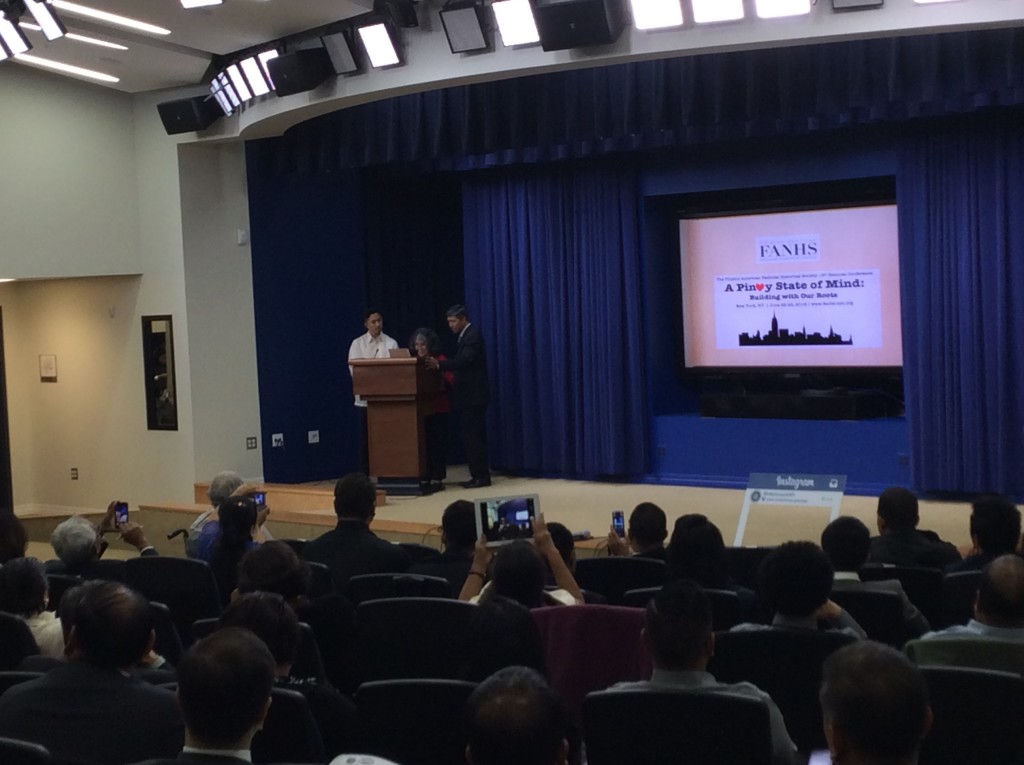
While some use “heritage” and “history” interchangeably, Dorothy Cordova from the Filipino American National Historical Society (FANHS) was on-hand to remind participants why we celebrate Filipino American History Month. This month is an opportunity to lift up the untold stories of people like Larry Itliong, who led the first farmworkers strike in Delano, CA fifty years ago this past September. That strike gave rise to the United Farmworkers movement, propelling Cesar Chavez to national prominence over Larry and other Filipino “manongs” (older brothers). Another Filipino American whose role in this history is also overlooked was Pete Velasco. We tell his story as a part of our work on aging via his widow, Dolores, who talks about their caregiving journey in the AARP-sponsored video, “Caregiving: Dahil Mahal Kita (Because I Love You).”
 This past weekend made important connections between seemingly disconnected celebrations for the Diverse Elders Coalition and our colleagues serving diverse constituencies. On Friday, our friends at the National LGBTQ Task Force and League of United Latin American Citizens (LULAC) sponsored an event to celebrate both LGBT History Month and Hispanic Heritage Month, especially the fifteen days the two celebrations overlap from October 1-15. Additionally, Sunday October 11 was National Coming Out Day, and as SAGE prepares for its upcoming fundraiser, its social media posts told us, “We want to make sure people know coming out is a big deal for ALL ages.” October 12th, too, is an important day for our communities, as discussions about American Indians/Alaska Natives have raised the controversy level not only for the Washington NFL football team but also the official celebration of Columbus Day, as an increasing number of states and cities opt instead to recognize “Indigenous People’s Day.”
As for me, my weekend also included an opportunity to celebrate Filipino American History Month, where I got to work with friends and colleagues to build on the activities this month at the White House. My work invokes “Auntie Dorothy’s” lessons from FANHS and reminds me that while we may celebrate heritage, we make history.
The opinions expressed in this article are those of the author and do not necessarily reflect those of the Diverse Elders Coalition.