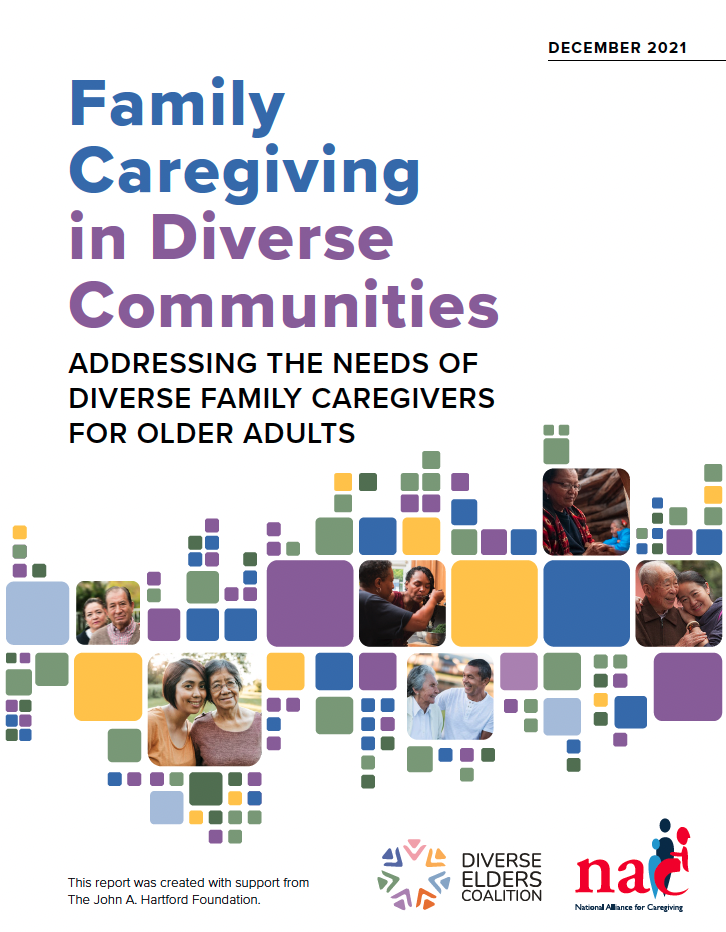
Infographic: LGBT Health, Racial Disparities, and Aging—by the Numbers

Preview. Download the full infographic below.

Preview. Download the full infographic below.

Download the infographic LGBT Health, Racial Disparities, and Aging—By the Numbers, today!

Americans who are people of color, older adults and LGBT identified (referred to in this blog post as LGBT elders of color) often have unique needs because of the intersections of identities. LGBT elders of color are historically marginalized on multiple fronts and their needs are often under addressed in the mainstream aging field and in the popular LGBT rights movement. Read More Read More

Life Lessons from a Hmong Grandfather to His Granddaughter

The following is a guest post from SEARAC’s Bao Lor.

grandpa and the kids

“Wake up, kids! It’s 6:30!” my grandpa said as he pulled off the blanket that covered my head. I moved around, pretending to stretch and then curling back into a ball. Through my squinted eyes, I could see that my siblings were still lying next to me. I popped my head up and looked at the alarm clock across the room. It read: 6:10. This was my daily routine growing up. I grew up with my grandparents taking care of me and my siblings since my parents were always so busy working. For as long as I can remember, my grandpa was always the one taking me and my siblings to school every morning, and picking us up every afternoon once school got out. We numbered a total of eight kids at the time who were all attending elementary, middle, and high school. My grandpa always said that once he dropped us all off at school, within an hour or so, he would have to start picking us up again. This was true given the fact that we were in almost every grade level.

Read More Read More

StoryCorps: A Transgender Woman’s Journey from Hiding to “Walking in Love”

Alexis Martinez (left) worried that coming out to daughter Lesley as transgender would mean giving up any relationship with her grandchildren. But she needn't have worried.

Alexis Martinez (left) worried that coming out to daughter Lesley as transgender would mean giving up any relationship with her grandchildren. But she needn’t have worried.

Alexis Martinez grew up in a rough neighborhood on Chicago’s South Side in the early 1960s. She knew she was transgender from an early age.Alexis (whose birth name is Arthur) struggled with her identity, as did her family. At 13, she came out as transgender to her mother. Alexis’ mother called the police, who laughed and told her, “You’ve got a fag for a son, and there’s nothing we can do about it.”

As a result, Alexis joined a gang and “went as macho as [she] could be, to mask what [she] really was underneath.”

Alexis has a daughter, who accepts her for who she is. Says her daughter Lesley: “You don’t have to apologize. You don’t have to tiptoe. We’re not going to cut you off. And that is something that I’ve always wanted you to, you know, just know—that you’re loved.” Read More Read More

Alzheimer’s Disease Among Hispanic Older Adults

Over the past several months, the National Hispanic Council on Aging (NHCOA) has conducted focus groups to learn about what Hispanic older adults and caregivers know about Alzheimer’s disease (AD).  We found that people have a wide variety of beliefs about what causes the condition and how to prevent it.  We also heard the insights of caregivers for people with AD.  While there is no known cure or prevention measure for AD, caregivers can pass on advice and teach other caregivers how to cope with the stress of providing care.

 ”I would have her tested to be able to help her better, and have a better life for me and all of those who live at home.”

“The doctor told me that she didn’t have Alzheimer’s-she said, who was I to tell her that? After examining her, the doctor admitted that she had early signs of Alzheimer’s.”

“For those of us who love our family members, I believe we have to give them a hand, take them to a doctor, have tests done-because in its early stages, maybe life is better for those who take care of them.” Read More Read More

Immigration Reform: Reducing Barriers to Naturalization for Older Immigrants

The Senate recently introduced a bill on immigration reform. The bill is extensive, and covers many issues. Here, we wanted to highlight a few provisions on naturalization for older immigrants.

The bill includes promising pieces on reducing barriers to naturalization for older immigrants. According to the Migration Policy Institute, there are more than 5 million immigrants over the age of 65 in the United States. Immigration reform presents a new opportunity—the best in years—to allow older new Americans to fully participate in American society and life, legally as well as civically.

Read More Read More

DEC Supports Inclusive Immigration Reform

The elder population is growing exponentially, and becoming increasingly diverse. Today, one in five older adults is Latino or non-White, and there are at least 1.75 million lesbian, gay, and bisexual people 65 and older.By 2030, the number of adults of color is projected to be almost one in three, and the population of lesbian, gay and bisexual individuals is expected to double. Older immigrants and diverse elders are more vulnerable, isolated and face greater barriers to accessing services than the general older adult population. As such, immigration reform presents a key opportunity to strengthen our programs and policies to better support older immigrants.

The DEC stands in support of the following principles, in support of inclusive immigration reform: Read More Read More

Health Equity for LGBT Older People of Color

April is National Minority Health Month and today’s post brings attention to the health disparities faced by LGBT older adults of color. The Diverse Elders Coalition’s member organization SAGE (Services & Advocacy for GLBT Elders) today released a new policy report ”Health Equity and LGBT Elders of Color.” The report can be downloaded here.

Read my recent editorial in The Huffington Post about health equity for LGBT elders of color. You can also read it on the SAGE Blog.

Screenshot of SAGE's new policy report Health Equity and LGBT Elders of Color

Screenshot of SAGE’s new policy report

Read More Read More

Immigration Reform and Politics in an Aging America

The Latino community is united in wanting to fix our nation’s broken immigration policies. Without a doubt, immigration is a galvanizing issue for the nation’s Hispanics, 75% of whom are United States citizens. The toxic rhetoric on immigration has affected us deeply, and that is why Latino voters last November generated a game-changing moment for this debate, giving us an opportunity to arrive at a solution. Our community is engaged and watching this debate closely. It matters not only to voters today, but it stands to shape the views of the nearly 900,000 Latino citizens who will turn 18 each year between now and 2028. This is an issue that impacts us, our families and our neighbors. Our immigration, asylum and naturalization laws must respect the dignity of the individual, reflect our nation’s commitment to human and civil rights and deny state and local encroachment into this federal arena.

Older Adult at NHCOA's National Annual Conference

Older adult at NHCOA’s National Annual Conference

During the past decade, there have been several attempts to tackle comprehensive immigration reform. While legislation is set to emerge in the next couple of months, we at NHCOA urge our leaders to be a beacon of hope for fair immigration reform, for our older adults expect nothing less. Indeed, immigration reform is one of the top three concerns for Hispanic older adults today. We stand at the cusp of a unique opportunity to uphold a key American value – ensuring opportunity for all to reach the American dream. Read More Read More

Immigration Reform: Key Issues for Older Adults and People with Disabilities

The National Hispanic Council on Aging (NHCOA) works with many organizations advocating for immigration reform.  However, not many advocates are considering the effect reform could have on older adults.  I am happy that NHCOA was able to partner with the National Council on Aging and Caring Across Generations to develop the issue brief Immigration Reform: Key Issues for Older Adults and People with Disabilities.  Aging advocates have a large role to play in immigration reform and this resource will help inform them on the varying issues faced by older people and people with disabilities.

Read the full issue brief here.

And don’t forget to come back on Wednesday April 10, right here on diverseelders.org as NHCOA’s president Dr. Yanira Cruz will blog about Immigration Reform and Politics in an Aging America.

A Gay Son and His Dad: “Why I am an Aging Advocate”

How my dad supported his gay son

There was a time in my life, around 11 years old, when I often skipped school because I was being bullied and harassed. It was obvious to my classmates that I was “different” and they targeted me because of it.  At lunch, there was a boys table and a girls table, but I was relegated to the “other” table.

I hated waking up for school. Sometimes I would put my head over the toaster to create a “fever” and ask my mother if I could stay home. Sometimes it worked. Sometimes it didn’t.  Those days that it didn’t, I would put on my uniform, grab my lunch and deliberately slam the front door to our apartment. The loud noise signified to my parents that I was on my way to school.

What I really did was tip toe back to my bedroom and hide in the closet. Inside, I would carefully listen for my family to leave for the day. Once they were gone, I would breathe a huge sigh of relief as it meant I could turn on the TV and relax—I was free from my bullies!

One Monday, the school administration called my mother to inquire why I hadn’t been attending. It just so happened my father was home that day and my mother demanded that he check to see if I was there.  As he called my name, my heart was pounding and I put my hand over my mouth to hide my breath as I hid in the closet. Read More Read More

Five Reflections on Advocacy with Southeast Asian American Elders

“Will immigration reform help me reunite with my grandchildren?”

 “My husband passed from cancer I wish there were more support services.”

 “We want to take care of our family in harmony.”

An elder at Cannon House Office Building

An elder at Cannon House Office Building

On Tuesday, March 26, 2013, 60 youth and elders spoke up with these comments and questions. SEARAC, alongside the Cambodian Association of Greater Philadelphia, held an advocacy day where the group met with the White House Initiative on Asian Americans and Pacific Islanders, the federal agencies, and Congressional offices in Washington, DC.

It was incredibly inspiring this week to see elders speaking up, with local impact through the group of Cambodian-American elders we hosted, as well national as I followed coverage of the Supreme Court arguments on United States v. Windsor. Check out our fellow DEC partner SAGE’s blog for more great insights on the issue and more about Edie’s own amazing story.

The week isn’t even over yet, but I wanted to contribute five reflections on advocacy with Southeast Asian American elders: Read More Read More

We are Looking for a National Coordinator for the Diverse Elders Coalition (Job Posting)

The Diverse Elders Coalition (DEC) is an  advocacy and education coalition made up of five national organizations representing millions of elders of color and LGBT elders around the country. The DEC focuses on strengthening policies and programs to enhance the health and well-being of diverse elders, educating and connecting our older people and their loved ones to key policy debates on aging, and increasing public support for issues that affect our communities. The coalition includes: the National Asian Pacific Center on Aging, the National Hispanic Council on Aging, the National Indian Council on Aging, Services & Advocacy for GLBT Elders and Southeast Asia Resource Action Center. Read More Read More

Recognizing Older Latinas During Women’s History Month

March is National Women’s History Month. Recognizing the contributions older Latinas make is important, but it does not happen often enough in our society. The Hispanic older women that the National Hispanic Council on Aging (NHCOA) works with encourage others to contribute to their communities and provide inspiration for those looking for the right way to give. The theme for this year’s Women’s History Month is “Inspiring Innovation Through Imagination,” and the community leaders that NHCOA has trained live this theme on a daily basis.

Over the last several years, NHCOA has conducted Empowerment and Civic Engagement Training (ECET) and developed over 800 community leaders, the vast majority of them older adult women. Read More Read More

The Re-launch is here!

Two weeks ago, we announced that we would be re-launching the Diverse Elders Coalition Blog.  Read here to find out more.

We are thrilled that this day has finally come. As we previously promised, in addition to our regular contributing bloggers, we will have exciting guest bloggers.  We will also display our content in a variety of different ways (e.g., pictures, videos, interviews, Top 5 columns, etc.) And much more! Have a suggestion? Contact us.

You can bookmark this page or subscribe to our RSS feed to stay updated. Check back on Wednesday to read our latest post, courtesy of National Hispanic Council on Aging (NHCOA). Until then, enjoy some highlights from the blog’s history:

1) Watch Our Story

2) The Unique Needs of Asian American and Pacific Islander Elders

3) 10 Considerations for Working with the Diversity of Older LGBT Latinos

We are Re-launching On March 18!

Share on Facebook and Twitter

Share on Facebook and Twitter

The Diverse Elders Coalition (DEC) was founded in 2010, and in July 2012 we launched our official website, which also serves as a news and commentary blog on the social, political and economic issues affecting the growing yet vulnerable demographic of elders who are Black, Hispanic, Asian/Pacific Islander, American Indian/Alaska Native, and lesbian, gay, bisexual and/or transgender (LGBT).In the last eight months, we have put out numerous posts on the issues that affect our communities and the creative ideas and best practices to address them. In the summer of 2012, we also released Securing Our Future: Advancing Economic Security for Diverse Elders, a resource that describes the issues facing elders of color and LGBT elders, who together will represent a majority of older adults in the United States by 2050.

In this time, we have received some wonderful comments on our work, as well as helpful feedback from our readers (all of you) on how to improve the site to better meet your needs—and we listened to you. Members of the Diverse Elders Coalition came together and crafted an exciting plan for moving forward by implementing many of your ideas, which you’ll see starting with our blog re-launch on March 18.  Here are some of the improvements to look forward to:

  • In addition to our regular contributing bloggers, we have some exciting guest bloggers scheduled!
  • Content displayed in a variety of ways (e.g., pictures, videos, interviews, Top 5 columns, etc.)
  • More news and original content from coalition members
  • And more!


As we look forward to March 18, please like us (and tell a friend!) on Facebook to stay updated on the events surrounding the launch and the latest news affecting diverse elders. If you have any questions about DEC or would like to submit an idea for a blog post, please contact us.

See you on the 18th!

To learn more about DEC members, click here.